

Most new sellers think design is the hardest part of Print on Demand (POD).It isn’t.
The hardest part is getting people to actually see your designs.
You can have the best graphic tee in the world, but if you label it “Cool Shirt,” nobody will ever find it. Etsy is a search engine, just like Google. If you don’t speak its language, you’re invisible.
That language is keywords.
For years, finding the right keywords meant hours of guessing or paying for tools you barely understood. Artificial Intelligence has changed that. You can now do in minutes what used to take days.
This guide walks you through keyword research the old way so you understand the fundamentals, and the new AI-powered way so you can scale profitably.
Why Keywords Are Your Business’s Lifeblood
When a shopper types something into Etsy’s search bar, the algorithm looks for matches in your:
- Titles
- Tags
- Attributes
- Listing Descriptions
Get this wrong and you get zero traffic.
Get it right and you unlock organic traffic: buyers finding you for free.
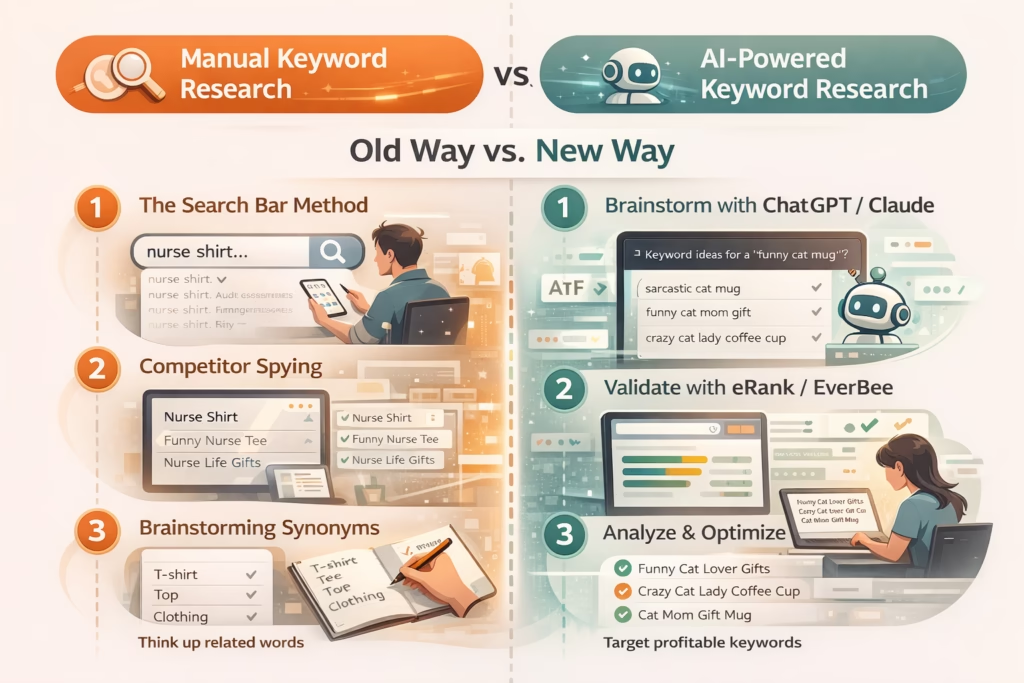
The Old Way: Manual Keyword Research
It’s important to know how to do this manually because AI is only as smart as the person driving it. You need to understand the fundamentals to verify what the AI tells you.
1. The Search Bar Method
This is the most basic form of research. Go to Etsy and start typing.
- Type “Nurse shirt”
- Wait for the dropdown menu.
- Etsy suggests: nurse shirt halloween, nurse shirt embroidered, nurse shirt funny.
The Pro: It comes directly from Etsy.
The Con: It doesn’t tell you how many people are searching or how much competition there is. You might target “nurse shirt” and be buried under 500,000 other listings.
2. Competitor Spying
Find a bestseller in your niche. Scroll down to the bottom of their listing page. Look at their tags.
- Are they using “Retro Nursing Tee”?
- Are they using “RN Gift”?
The Pro: Proven success.
The Con: Copying tags doesn’t guarantee you’ll rank. That seller might have thousands of sales history pushing them up, which you don’t have yet.
3. Brainstorming Synonyms
You sit with a notebook and write down every way to describe your item.
- T-shirt, Tee, Top, Apparel, Clothing…
The Pro: Free.
The Con: You will miss phrases that real buyers use. You might call it a “graphic tee,” but a buyer might search for “aesthetic clothes.”
Manual research is slow. It’s tedious. And frankly, it’s where most beginners quit.
The New Way: AI-Powered Research
AI doesn’t just guess; it analyzes patterns. It can generate hundreds of ideas in seconds and helps you find “long-tail keywords.”
What is a long-tail keyword?
- Short tail: “Dog Shirt” (High competition, hard to rank)
- Long tail: “Retro Golden Retriever Mom Shirt” (Lower competition, highly specific buyer)
AI is the best tool for finding these specific, profitable phrases. Here is your step-by-step workflow.
Step 1: Brainstorming with General AI (ChatGPT / Claude)
Use a general chatbot to get the ball rolling. Don’t ask it to “give me SEO tags.” Ask it to think like a buyer.
The Prompt:
“I am selling a [describe product, e.g., mug with a funny cat design] on Etsy. List 20 specific search phrases a customer might use to find this. Focus on long-tail keywords, gift recipients, and occasions.”
The Output:
You’ll get results you never thought of, like:
- Crazy cat lady gift
- Cat mom coffee cup
- Coworker gift for cat lover
- Funny office mug
Action: Copy this list. These are your seed keywords.
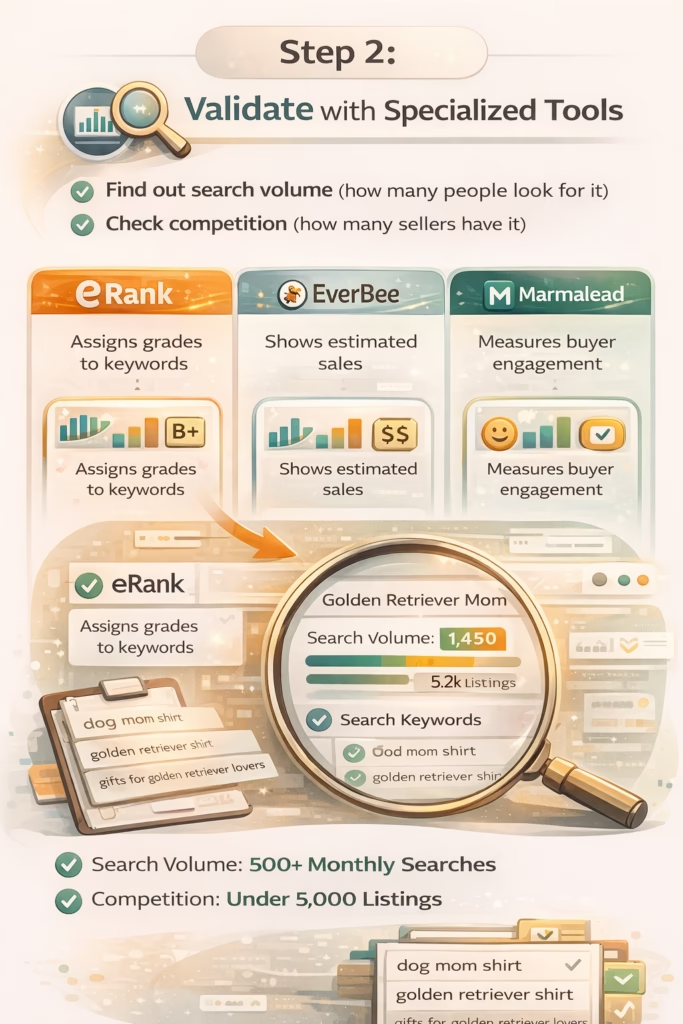
Step 2: Validation with Specialized Tools
This is the most critical step. ChatGPT can give you ideas, but it cannot give you data. It doesn’t know if “Crazy cat lady gift” has 10 searches a month or 10,000.
You need a specialized Etsy SEO tool to validate the demand.
Top Tool Recommendations
There are a few heavy hitters in the Etsy space. Most offer free trials or free tiers.
1. eRank: Keyword Demand & Competition
I use eRank’s Keyword Explorer to see how many people are searching for a keyword and how competitive it is.
Instead of guessing, you immediately know whether a keyword is worth targeting.
2. EverBee
Search volume does not equal revenue.
That’s why I also use the EverBee Chrome extension to estimate competitor sales and confirm buyer intent.
If a keyword generates consistent sales for others, it can generate sales for you.
Step 3: Analyzing the Data
Take your list from Step 1 and plug the best ones into eRank or EverBee. You are looking for the “Golden Ratio”:
- Search Volume: At least 500+ monthly searches.
- Competition: Low enough that you stand a chance (ideally under 5,000 listings, though under 50,000 is okay for strong designs).
If ChatGPT suggested “Cat Mug,” you’ll see the competition is too high.
If it suggested “Sarcastic Sphynx Cat Mug,” the volume might be lower, but the people searching for it are ready to buy.
Step 4: Writing Your Listing with AI
Once you have your validated keywords, you need to put them in your Title and Description.
The Title:
Etsy titles are for the algorithm first, humans second.
- Bad Title: Cute Cat Mug for Coffee or Tea
- Good Title: Funny Cat Lover Gift, Cat Mom Coffee Mug, Sarcastic Office Cup, Kitten Graphic Tea Cup, Crazy Cat Lady Present
The Description:
Etsy’s algorithm now scans descriptions for SEO. Do not stuff keywords here. It needs to read naturally. This is where AI shines again.
The Prompt:
“Write an engaging Etsy product description for a
. Include these keywords naturally: [paste your validated list]. The tone should be fun and relatable.”
AI will weave your keywords into sentences that sound human, saving you the headache of writing copy from scratch.
Step 5: The 13 Tags
You get 13 tags on every listing. Use. Every. Single. One.
Leaving a tag blank is throwing away a lottery ticket.
- Use your validated long-tail keywords.
- If a phrase is too long (tags have a 20-character limit), break it up logically.
- Use AI to check for variety. Ask: “Give me 5 synonyms for ‘gift for her’ that fit Etsy tag limits.”
Common Mistakes to Avoid
Even with AI, new sellers mess this up. Watch out for these traps.
1. Keyword Stuffing the Description
Don’t write: “Mug cat mug coffee mug tea cup cat lover.”
Etsy hates this. Google hates this. Buyers hate this. Write sentences.
2. Being Too Generic
“Gift for him” is useless. Who is he? A dad? A boyfriend? A plumber? A golfer? Be specific. AI is great at drilling down into niches.
3. Ignoring “Attributes”
When you list an item, Etsy asks for color, occasion, holiday, etc. These act like extra tags. Fill them out. If you select “Christmas” in the attributes, you don’t need to waste one of your 13 tags on the word “Christmas.”
4. Setting and Forgetting
SEO isn’t a one-time task. Trends change. “Barbiecore” was huge one year and gone the next. Use EverBee or eRank to audit your listings every few months.
A Real-World Workflow Example
Let’s say you want to sell a “Teacher Tote Bag.”
- Ask ChatGPT: “Give me niche ideas for a teacher tote bag.”
- Idea: “Teacher Appreciation Gift for End of Year.”
- Validate in EverBee: You look up “End of Year Teacher Gift.”
- Result: High search volume, manageable competition.
- Idea: “Custom Teacher Name Bag.”
- Result: Very high sales volume.
- Draft with AI: You ask ChatGPT to write a title combining these.
- Draft: “Personalized Teacher Tote Bag, End of Year Teacher Gift, Custom Name School Bag, Appreciation Present for Educator.”
- Publish: You list the product using these data-backed terms.
Conclusion
You don’t need to be a marketing genius to rank on Etsy. You just need to be practical.
Manual research helps you understand the basics, but AI tools speed up the process and back your decisions with real data. Stop guessing what people want to buy. Use the tools available to find out exactly what they are searching for, and put your product right in front of them.
Start with a free trial of eRank or EverBee. Open ChatGPT. Validate your ideas. Designing is the fun part, but validation is the profitable part.
Meta data
Meta title
Etsy Keyword Research: The Ultimate Manual vs. AI Guide
Meta description
Stop guessing your tags. Learn how to combine AI tools like ChatGPT with eRank and EverBee to find high-traffic, low-competition keywords for your Etsy shop.