
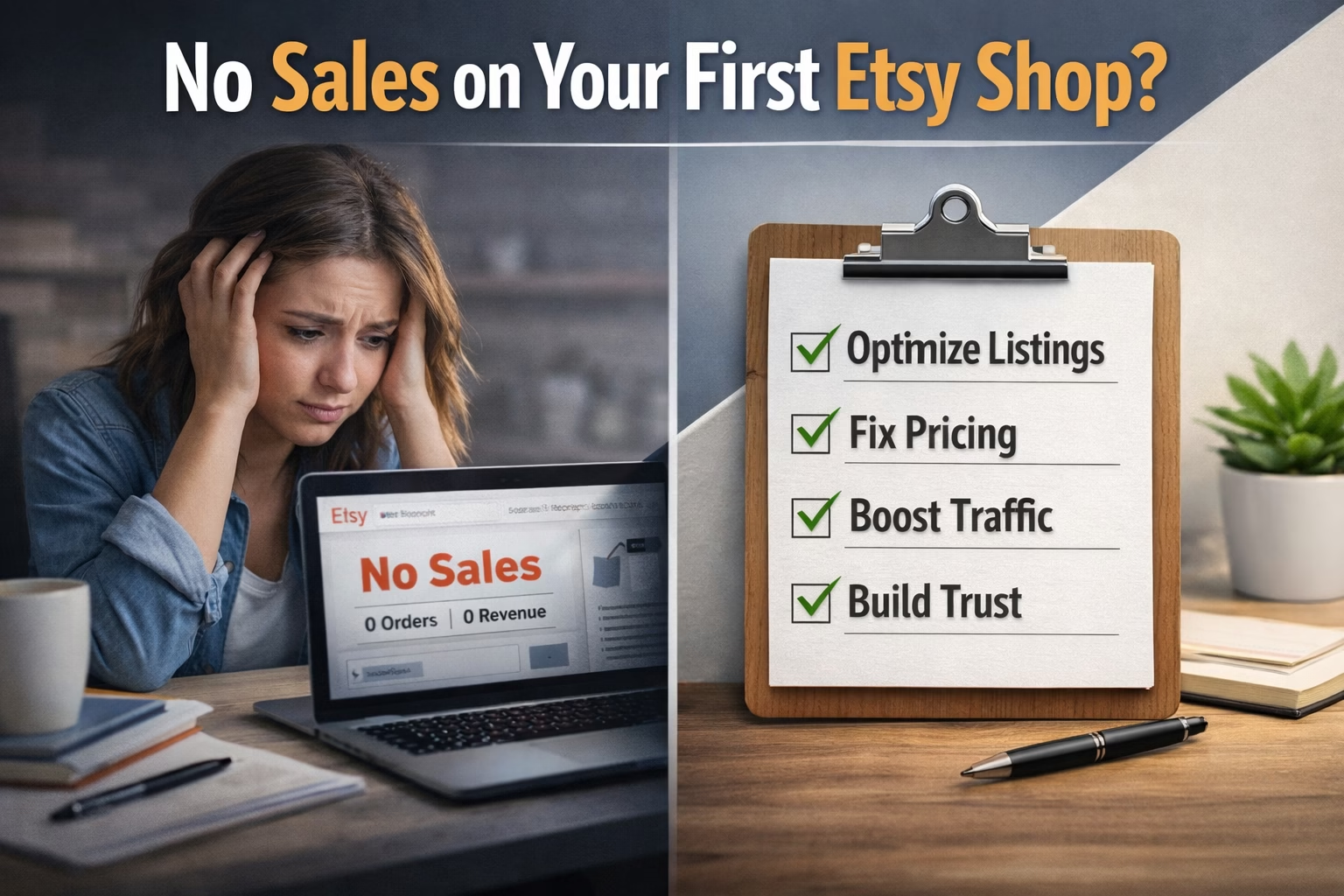
 Struggling to make your first sale on Etsy? You’re not alone. Many new sellers face challenges in standing out in a crowded marketplace. In this article, we explore a detailed checklist to optimize your Etsy shop for success, covering everything from product listings to customer engagement. Dive in to transform your store and start making sales.
Optimizing Product Listings
Your listing is your silent salesperson, and on Etsy it has only a few seconds to stop a scroll. Start with photos because they carry the heaviest weight in buyer trust. Use bright, even lighting (near a window, indirect light), a clean background, and keep colors accurate so returns don’t spike. Include a minimum of 7–10 images that answer objections without a single message:
- Hero shot that clearly shows what it is (no clutter, no props that confuse scale)
- Close-ups of texture, stitching, engraving, or finish
- Scale reference (in-hand, next to a common object, or worn)
- Use-case image (in a room, on an outfit, in a gift setting)
- Size/measurement graphic (simple text overlay is fine)
- Packaging and “what’s included” photo
- Variation comparison (colors, styles, bundle options)
If your product’s value is in detail (handmade, premium materials), shoot closer than you think you need to. If it’s digital, show multiple preview pages and a mockup of how it’s used.
Then write descriptions that sell benefits, not just features. Buyers don’t want “soy wax candle”; they want “clean burn, strong throw, headache-free scent.” Open with 2–3 sentences that mirror the buyer’s intent: what problem it solves, what moment it enhances, who it’s for. Use short paragraphs and scannable lists so mobile shoppers don’t bounce:
- What you’ll love: comfort, durability, personalization, time saved
- Details: materials, dimensions, colors, finish, care
- Options: how to choose variations, add-ons, bundles
- Shipping: processing time, customization timeline, gift note
Add keyword-rich wording naturally, but make it human. Repeat critical specifics in plain language: size, compatibility, and exactly what arrives. Finally, reduce friction: anticipate common questions (fit, sizing, customization limits, how to order) and answer them clearly. A listing that eliminates uncertainty converts, even before you “master SEO,” which is the next step.
Mastering Etsy SEO
Etsy SEO is the bridge between a well-made listing and the shopper who’s already searching for it. Etsy’s search system matches a buyer’s query to the words it can “see” in your title, tags, categories, and attributes, then decides which listings deserve the most visibility based on performance signals (clicks, favorites, purchases) and listing quality. If you have no sales, assume your listings are not being shown to the right searches yet.
Your first checklist item: make sure Etsy understands exactly what you sell. Categories and attributes aren’t optional metadata; they function like additional tags. Choose the most specific category path possible, then fill out every attribute that applies (material, color, occasion, room, style). This expands the number of relevant searches your item can appear in without keyword stuffing.
Next, rebuild your keyword strategy around search intent. Avoid vague words shoppers don’t type (“cute,” “beautiful,” “high quality”) and focus on phrases that describe what it is, who it’s for, and why it’s unique. Think in layers:
- Core product phrase (what it is): “personalized leather wallet”
- Qualifier (style/material/feature): “minimalist,” “RFID,” “engraved”
- Use case or recipient: “groomsmen gift,” “Father’s Day gift”
Titles should lead with the strongest, most exact phrase, then add 2–3 supporting phrases separated naturally (commas or dashes). Don’t cram every synonym; Etsy already mixes and matches words. Prioritize readability because higher click-through improves ranking over time.
Tags are where you capture alternate wording. Use all 13 tags, aiming for multi-word phrases shoppers would actually type. Treat tags like a coverage plan:
- 3–5 tags for core terms and close variants
- 3–5 tags for use cases/recipients/occasions
- 2–3 tags for style/material/size specifics
- 1–2 tags for problem/benefit searches (e.g., “small space decor”)
Avoid repeating identical phrases already covered by your category/attributes; use tags to broaden reach. Then, verify alignment: the main keyword in the title should also appear in at least one tag and be supported by the chosen category. Once SEO is aligned, the next lever is getting more clicks—and photography is what earns them.
Using High-Quality Product Photography
Even if your Etsy SEO is dialed in and you’re showing up in search, your photos decide whether shoppers click and whether they trust you enough to buy. On Etsy, images are your storefront, your packaging, and your “quality assurance” all at once. Crisp, consistent photos signal professionalism, reduce uncertainty, and directly raise click-through rates because they stand out in a grid of competing listings.
Start with lighting, because it solves 80% of “my photos look cheap.” Use bright, indirect natural light from a window. Place your setup next to the window and turn off overhead bulbs (mixed lighting creates odd colors). If sunlight is harsh, soften it with a sheer curtain or white paper taped to the window. For night or consistency, use a simple two-light setup: two identical daylight LED lamps positioned at 45-degree angles, plus a white foam board opposite your key light to bounce shadows back in.
Backgrounds should support the product, not compete with it. Aim for clean, simple, and repeatable. A seamless look is easy: a sheet of white poster board curved from vertical to horizontal makes an “infinite” backdrop. For warmer brands, use light wood, linen, or matte neutral surfaces. Avoid glossy countertops and busy fabrics that create glare or visual noise.
Composition should answer shopper questions fast:
- Primary hero shot: the clearest, most scroll-stopping angle, tightly framed.
- Scale shot: in-hand or next to a common object (ruler, coin, notebook).
- Detail close-ups: texture, stitching, engraving, print clarity.
- Use/context image: the item in a real setting so buyers imagine ownership.
- Variants: color options, personalization examples, packaging or gift-ready presentation.
Shoot straight, keep horizons level, and use the same distance and angles across listings to build a cohesive shop “shelf.” Use your phone’s 1x lens (avoid wide-angle distortion), tap to focus, lower exposure slightly to preserve highlights, and use a tripod or stable stack of books to eliminate blur. Edit lightly: correct brightness and white balance, keep colors true, and don’t over-sharpen. When your photos look reliable, your pricing in the next step feels justified instead of questioned.
Pricing Strategies
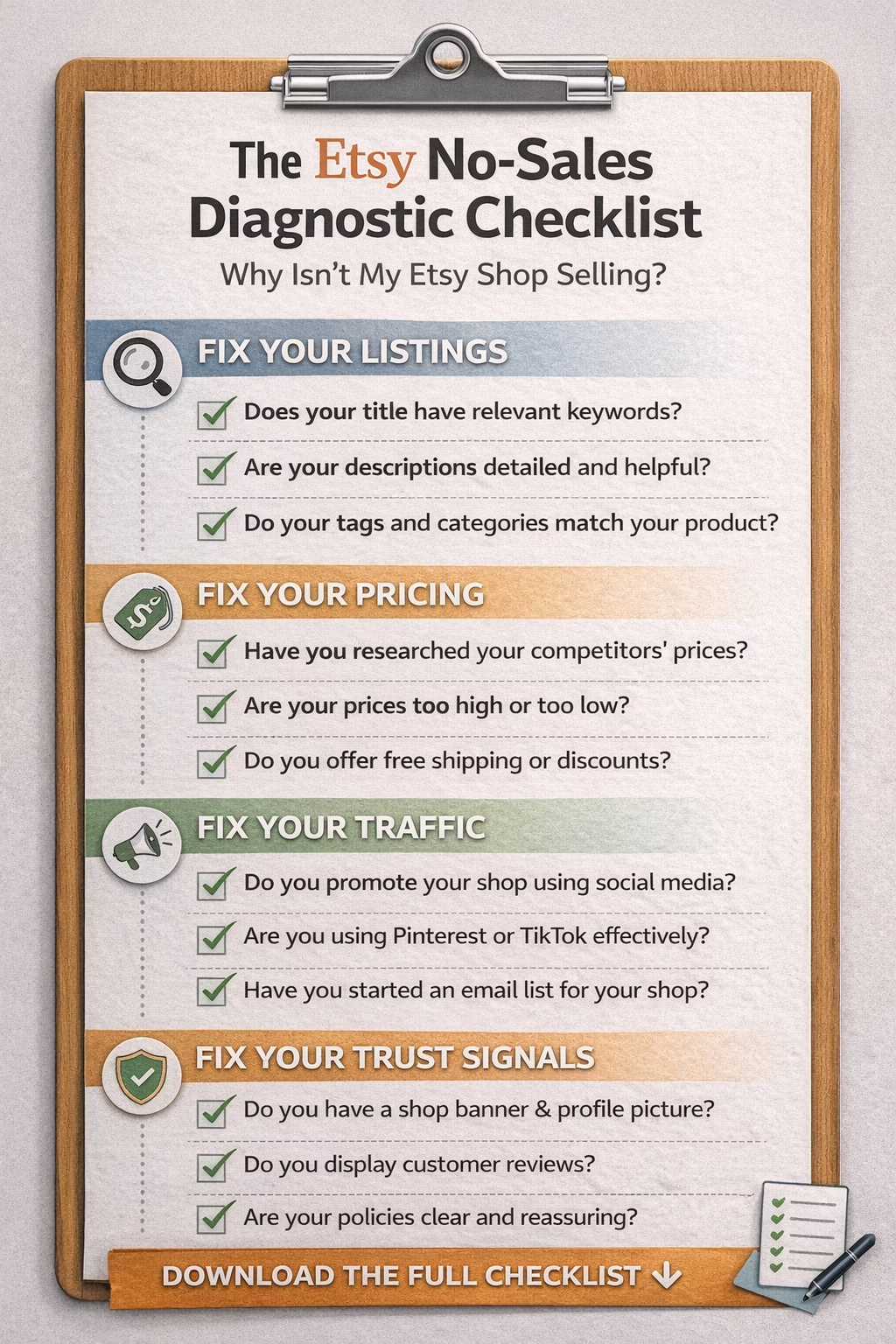
If your photos are doing their job and shoppers are clicking, pricing is often the hidden reason they still don’t buy. The goal is to look “worth it” at a glance while protecting your margin.
Start with a competitor scan that’s more than a quick search. Open 10–20 listings that truly match your product (same material, size, customization level, and shipping origin). Note the price range, how many sales they have, whether they charge shipping, and what’s included (gift wrap, personalization, bundles). Then look for patterns: Are top sellers winning by being cheapest, or by offering a stronger package at a mid-to-high price? This tells you whether your category is price-led or value-led.
Build your price from the inside out. Include all costs: materials, packaging, Etsy fees, payment processing, ad spend (if any), and a realistic hourly rate for your labor. Add a buffer for mistakes and replacements. Many “no sales” shops are priced like a hobby, which leads to burnout—or they price high without supporting value (clear differentiation, strong keywords, fast shipping). Your number should be defensible.
Choose a strategy intentionally:
- Competitive entry price: Start near the market median to reduce risk, then raise once you have reviews and proof.
- Good/Better/Best tiers: Offer a base version, a popular upgraded option, and a premium bundle. This makes the mid-tier feel like the smart choice.
- Value-based pricing: If you offer customization, premium materials, or a niche style, price higher and make the benefits explicit in the listing details.
Shipping can make or break conversion. “Free shipping” often increases clicks, but it’s rarely free—roll the average shipping cost into the item price and verify you still profit. If shipping varies a lot, charge shipping but keep it predictable: use calculated shipping, set processing times accurately, and avoid surprise add-ons. Consider testing a small handling fee only if packaging is unusually expensive, and explain it.
Discounts should be occasional and purposeful. A constant sale trains buyers to wait. Instead, use limited-time offers, small “favorites” coupons, or bundle discounts to increase average order value without destroying your margins.
Crafting an Appealing Shop Profile
Your shop profile is the moment a shopper decides whether your prices make sense and whether your store feels “real.” Before they even click a listing, Etsy shows your shop name, icon, review count, and a slice of your branding. If that first impression feels unfinished, shoppers often bounce, even if your product is good.
Shop logo (icon): make it readable at tiny size. Etsy displays your icon in small circles across search and on mobile. Choose a simple mark with high contrast and minimal text. If you use lettering, keep it to 1–3 bold characters that stay legible when shrunk. Consistency matters more than complexity: use the same colors and style across packaging, social profiles, and thank-you notes so repeat visitors recognize you instantly. A clean logo signals stability, which lowers the perceived risk of buying from a new shop.
Banner: tell them what you sell and who it’s for in 3 seconds. Your banner should communicate your product category and vibe without forcing people to read paragraphs. Use a crisp lifestyle photo (your product in use) or a clean layout with: product type, style promise, and a quick differentiator (materials, customization, shipping speed). Avoid clutter; negative space is your friend. If you sell multiple categories, pick the one you most want to be known for and let the listings do the rest.
Bio and “About”: replace generic passion statements with proof and process. Shoppers don’t convert because you “love creating.” They convert because they understand what they’re buying, why it’s made well, and what happens after purchase. Include:
- What you make and the problem it solves or occasion it fits
- Materials and method (specifics build trust)
- Your quality standard (testing, sourcing, finishing, packaging)
- Turnaround and communication (when you reply, how customs work)
- Why you’re different (design perspective, local production, eco choices)
Add 2–4 behind-the-scenes photos: workspace, tools, packaging, and a close-up of craftsmanship. This creates credibility that supports your pricing without re-explaining it.
Finally, align your shop announcement and policies with buyer anxiety: clarity on processing times, returns/exchanges, and custom order steps. A polished profile doesn’t just look nice; it removes doubt—so when you later amplify visibility with ads and promotions, the traffic you pay for has a much higher chance of converting.
Leveraging Etsy Ads and Promotions
Once your shop profile looks credible and cohesive, the fastest way to get your first real data (views, clicks, favorites, and purchases) is to test Etsy Ads and built-in promotions. Ads don’t “fix” a weak listing, but they can solve the early visibility problem by placing your products in more searches while you refine photos, pricing, and keywords.
Use Etsy Ads for controlled visibility
Etsy Ads push your listings higher in Etsy search and on similar listing pages. Think of them as paid impressions targeted by Etsy’s own shopper behavior signals. Start with a small, sustainable daily budget so you can run long enough to learn, not just spike traffic for two days and stop.
Budget checklist (so you don’t burn money)
- Set a daily budget you can afford for at least 14 days (consistency matters for learning).
- Expect a “learning period”: early results can be noisy while Etsy tests placements.
- Track profit, not just sales. If your margin is $8, you can’t spend $7 to get a sale and call it a win.
- Raise budgets only after you identify at least one listing with steady clicks and favorites.
Choose what to advertise (don’t promote everything)
Pick listings that can convert with cold traffic:
- Best-sellers or strongest “almost-sellers” (lots of favorites, carts, or reviews).
- Clear use-case and giftability (buyers decide faster).
- Competitive pricing and shipping terms (ad traffic is less patient).
- Multiple photos that answer objections (size, scale, materials, variants).
Avoid advertising unproven items with vague photos, long processing times, or unclear personalization steps. Ads amplify weaknesses.
Promotions that boost conversion once traffic arrives
Use sales and coupons to turn visits into purchases:
- Run a small “favorites” coupon to capture hesitant shoppers.
- Use cart-abandonment offers sparingly; keep discounts modest to protect perceived value.
- Consider free shipping thresholds if your average order value can realistically reach it.
Balancing paid ads with organic traffic
Paid ads are a lever, not a foundation. Keep improving listings for organic search while ads run. If a listing only sells with ads, treat that as a signal: either the keywords/photos need work, or the product isn’t compelling at its current price. Meanwhile, be ready for the extra messages ads create—quick, clear responses and smooth problem-solving are what turn first-time buyers into repeat customers and reviews.
Enhancing Customer Service
If you’re getting views from ads or organic search but no sales, customer service is often the missing “trust bridge.” On Etsy, buyers can’t touch the product, so they buy confidence: clear answers, fast responses, and proof that you’ll take care of them if something goes wrong. Your goal is to remove hesitation before and after checkout.
First, tighten your communication standards. Etsy shows response time, and many buyers message before purchasing. Set a simple rule: reply within 12–24 hours (faster during peak seasons). If you can’t answer fully, acknowledge quickly and give a timeline. Save reusable “snippets” for common questions (sizes, materials, customization limits, processing times), but always personalize one line so it doesn’t feel automated.
Use this service checklist:
- Pre-sale clarity: confirm what’s included, dimensions, turnaround, and shipping cutoffs; repeat the key detail the buyer is worried about (fit, color, delivery date).
- Expectation management: never promise what you can’t control (carrier delays). Use wording like “ships by” and offer upgrade options.
- Proactive updates: message when an order is started (for handmade/custom), when it ships, and if anything changes.
- Receipts and aftercare: include a short thank-you note with care instructions or setup tips. This reduces complaints and increases “everything arrived perfect” reviews.
When issues happen, treat them like conversion opportunities. Respond calmly, summarize the problem in your own words, and offer two clear solutions (replacement, partial refund, return label, remake timeline). Buyers don’t expect perfection; they expect fairness and speed. Document everything in Etsy Messages to keep the case trail clean.
Positive reviews are your compounding engine: they lift conversion rate, strengthen listing credibility, and can improve how confidently shoppers click from search. Don’t beg for reviews; earn them through small “above and beyond” moments: accurate delivery estimates, thoughtful packaging, and quick resolution. After delivery, send one polite follow-up: confirm it arrived, offer help, and gently invite feedback if they’re happy. Over time, that service discipline turns first-time visitors into repeat customers—and sets you up to amplify results when you expand marketing beyond Etsy.
Expanding Your Marketing Efforts
If your customer service is strong but traffic is low, the next fix is simple: stop relying on Etsy search alone. You’re not just trying to “market”; you’re trying to create steady, controllable streams of targeted visitors who already want what you sell.
Social media (pick one primary platform first)
Social works when your content matches buying intent, not when it’s random “posting.”
- Pinterest: Treat it like a visual search engine. Make multiple pins per listing (different photos, use-cases, angles). Pin to keyword-rich boards that mirror what people search (e.g., “minimalist wedding invitations,” “teacher gift ideas”). Link pins directly to the Etsy listing that best matches the pin.
- Instagram/TikTok: Lead with short product demos, packaging videos, before/after shots, and “how it’s made.” Create 3–5 repeatable content formats so you can post consistently without burnout. Always include a single call-to-action: “Find it in my Etsy shop” or “Link in bio.”
Blogging and SEO (only if your product needs explanation or comparisons)
A blog is useful when customers ask questions before buying: sizing, personalization, care instructions, gift guides, or “best for” comparisons. Write posts that answer these questions and link to the most relevant Etsy listings. Focus on long-tail searches (very specific phrases) rather than broad ones. One strong article can send traffic for months, unlike a post that disappears in a feed.
Email newsletters (your safety net beyond algorithms)
Email turns “one-time visitors” into repeat buyers. Offer a reason to subscribe: a care guide, a printable, early access, or a small discount. Send short, consistent emails:
- New product drops and restocks
- Seasonal gift reminders
- Behind-the-scenes proof of quality (materials, process)
Drive subscribers to one featured listing or collection at a time to avoid decision fatigue.
Collaborations to borrow trust and audience
Partner with micro-influencers who already speak to your niche. Send a product and a clear brief: what problem it solves, how to show it, and the exact link to use. Also collaborate with complementary Etsy sellers (not competitors) for bundles, cross-promotions, or shared gift guides. Agree on tracking (unique coupon codes or specific listing links) so you can see what actually converts before scaling.
Analyzing Shop Performance
If you’re already driving traffic from outside Etsy, the next step is making sure that traffic is actually converting—and that’s where Etsy Analytics becomes your control panel. Start in your Shop Manager and look at the date range first. A seven-day window is useful for spotting sudden shifts (a new listing, a price change), while 30–90 days reveals whether you have a real trend or just normal daily noise.
Use these core metrics as a diagnosis checklist:
- Visits vs. Views: Visits are people; views are listing page loads. If views are high but visits are low, you may be relying on repeat browsing from the same shoppers or strong internal navigation but weak reach. If visits are healthy and views are low, your listing thumbnails may not be enticing enough to earn clicks.
- Conversion rate: This is your “sales efficiency.” If you have traffic but no sales, prioritize conversion fixes before chasing more visitors. A weak conversion rate often points to pricing/ship cost surprises, unclear photos, weak descriptions, or missing buyer confidence elements.
- Traffic sources: Compare Etsy search, Etsy app, direct, social, and “Etsy marketing & SEO.” If Etsy search is low, your keywords and category choices aren’t aligned with real queries. If social is high but conversion is low, your audience intent may be mismatched (people like the content but aren’t shopping).
- Search terms: Look for terms bringing impressions but few clicks: your tags may be relevant, but your first photo/title isn’t winning the click. Terms bringing clicks but no purchases usually signal a listing-page problem (offer, trust, or clarity).
Then act like a tester, not a guesser. Make one change at a time (primary photo, price, shipping, title structure, personalization options), let it run long enough to collect data, and compare to the prior period. Keep a simple log of what you changed and when.
Finally, watch patterns that reflect trend shifts: seasonality, gifting peaks, color/style surges, or buyers moving toward faster shipping. When you see a listing gaining favorites but not purchases, consider adjusting variations, bundle options, or turnaround time. Data doesn’t just report performance—it tells you exactly what to refine next.
Conclusions
By meticulously following this checklist, you can identify and rectify potential issues hindering your Etsy shop’s success. From optimizing listings to strategic marketing, each step enhances your online presence. Implement these improvements consistently, and you’ll likely see an uptick in sales, turning your Etsy journey from frustrating to fruitful.