
 Are your Etsy listings struggling to get the visibility they deserve? In this article, we explore the common issues that might be impacting your Etsy shop’s traffic, from poor search visibility to ineffective SEO strategies. We’ll dive into actionable tips to optimize your listings and drive more views to your Etsy shop.
Understanding Etsy’s Algorithm
Etsy listings not getting traffic often comes down to how Etsy decides which results deserve the limited space on page one. The algorithm is not trying to “reward” shops; it’s trying to predict which listing will satisfy a shopper’s intent and lead to a sale. Three forces usually explain why Etsy listings not getting views: relevance, listing quality, and recency. When any one of these is weak, Etsy SEO feels like it’s not working, even if your tags look “right.”
Relevance is Etsy’s confidence that your listing matches what the buyer typed. Etsy reads your title, tags, categories, and attributes and tries to map them to the query. If your product is in the wrong category, missing key attributes, or your tags don’t reflect how shoppers actually search, you’ll see Etsy search visibility issues even with a great product. Relevance is also contextual: the same listing can surface for one phrase but disappear for another because Etsy interprets intent differently (gift vs. supply vs. finished product, style vs. material).
Listing quality is where many “Etsy shop no traffic” situations originate. Etsy watches what happens when shoppers see your listing: clicks, favorites, add-to-carts, purchases, and even quick bounces back to results. If impressions happen but clicks don’t, your main photo and price positioning may be suppressing you. If clicks happen but purchases don’t, the algorithm learns your listing is a weaker match or a weaker offer. Over time, low engagement creates a feedback loop: fewer placements, fewer chances to earn engagement, slower growth.
Recency gives temporary visibility to new or renewed listings so Etsy can test performance. This is why you may see a short spike and then a drop; it’s not a punishment, it’s the test ending. If the listing doesn’t convert during that window, it won’t sustain rank. If it does, it can earn longer-term placements.
These elements combine dynamically and vary by shopper, location, and device. That’s why Etsy keyword mistakes can’t be solved by “more tags” alone; the system is evaluating whether your listing is the best result for the searcher, not just whether it contains the words.
Common Mistakes in Etsy SEO
Many cases of etsy listings not getting traffic come down to keyword choices that don’t match how shoppers actually search. A common trap is keyword stuffing: repeating the same root phrase in the title, tags, description, and attributes (“silver necklace silver necklace silver necklace”). This doesn’t create more relevance; it creates noise. Etsy still needs a clear, readable phrase that signals what the item is, who it’s for, and why it’s special. When everything is crammed with near-duplicates, you miss out on capturing multiple search intents and can trigger etsy search visibility issues because your listing looks unfocused. I have another article that goes in depth on these and other Etsy listing problems and to fix them right here.
Another reason etsy listings not getting views is relying only on broad, competitive keywords (“necklace,” “printable,” “wedding gift”). These terms have huge search volume but also huge competition, so a newer or average-performing listing gets buried. Sellers then assume etsy seo not working when the real issue is that the keywords are too generic. Long-tail keywords—specific multi-word phrases—often bring fewer searches but higher buying intent and better ranking opportunities. Examples include “minimalist sterling silver initial necklace” or “boho terracotta wedding invitation template.”
Many etsy keyword mistakes come from guessing instead of researching. Use Etsy’s search bar as a free demand signal: start typing your core product (“linen apron”) and note autocomplete suggestions (like “linen apron cross back” or “linen apron for men”). Those suggestions reflect real shopper language. Then compare them to what you’re currently using; if your tags say “chef apron” but Etsy suggests “cross back apron,” you’ve found a mismatch that can cause an etsy shop no traffic pattern.
Competitor analysis should be structured, not copied. Search your main phrase, open the top listings, and look for repeated modifiers across several shops (materials, style, recipient, occasion, size). Build a list of those patterns and choose the ones that truthfully apply to your item. Avoid duplicating the same concept in multiple tags (e.g., “gold ring,” “golden ring,” “ring gold”). Instead, cover different angles:
- Material + item
- Style/aesthetic
- Recipient/occasion
- Key feature (size, personalization, color)
This breadth gives Etsy more entry points to match you with relevant searches, setting up the next step: placing those keywords effectively in titles and tags.
Optimizing Etsy Titles and Tags
If your Etsy listings aren’t getting traffic even after keyword research, titles and tags are often the bottleneck. Etsy SEO “not working” is frequently a placement problem: you may have the right words, but they’re buried, duplicated, or not aligned with how Etsy parses phrases. Etsy reads your title and tags to understand what you sell, then matches that to shopper queries. When your title is vague (“Cute Gift”), crammed with repetitive terms, or stuffed with unrelated phrases, Etsy can’t confidently rank it for specific searches, causing Etsy search visibility issues.
A strong title uses keywords naturally, prioritizing clarity and phrase-level relevance. Put the primary long-tail phrase near the beginning, then add secondary descriptors shoppers actually type (material, style, recipient, occasion). Avoid filler words and avoid repeating the same keyword in multiple forms. Think: one clear “core query” + supporting qualifiers.
Title pattern that tends to perform well:
- Primary phrase + key attribute (material/style) + use case/recipient + optional occasion
Example optimized titles:
- “Personalized Leather Dog Collar, Engraved Name Plate, Adjustable Pet Collar for Medium Dogs”
- “Minimalist Gold Hoop Earrings, Hypoallergenic Stainless Steel, Everyday Small Huggie Hoops”
- “Custom Family Recipe Cutting Board, Engraved Wood Board, Housewarming Gift for Couples”
Tags should expand your reach, not mirror your title word-for-word. Etsy combines words across tags, so your job is to cover meaningful phrase variations and buyer intent without wasting slots. Strategic tag selection fixes many “Etsy shop no traffic” situations because it increases the number of real searches you can match.
Tag strategy that boosts visibility:
- Use multi-word tags (more specific search matches).
- Mix synonyms (hoops/huggies, engraved/personalized).
- Add intent tags (gift for mom, housewarming gift) only if the item truly fits.
- Use different angles: material, style, size, recipient, occasion, problem solved.
Example title + tag set (earrings):
- Title: “Minimalist Gold Hoop Earrings, Hypoallergenic Stainless Steel, Everyday Small Huggie Hoops”
- Tags: “gold huggie hoops”, “small hoop earrings”, “stainless steel earrings”, “hypoallergenic hoops”, “minimalist jewelry”, “everyday earrings”, “gift for her”, “dainty hoop earrings”, “simple gold hoops”, “sensitive ears”, “modern earrings”, “tiny hoop earrings”, “gold hoops”
When titles and tags are aligned, the next lever is your description: reinforcing these phrases with readable detail that builds trust and supports ranking.
Improving Etsy Listing Descriptions
After your titles and tags are doing the heavy lifting to earn impressions, the listing description determines whether those impressions turn into clicks, favorites, and purchases. When Etsy listings aren’t getting views or your Etsy SEO isn’t working, it’s often because the description fails to confirm relevance quickly, answer buyer questions, or signal strong engagement (time on page, add-to-cart, conversion). Etsy wants to rank listings that satisfy shoppers; vague descriptions can create high bounce rates and low conversion, which can contribute to Etsy search visibility issues over time.
Write descriptions to serve two audiences at once: the shopper scanning for reassurance and the algorithm looking for topical consistency. You don’t need to “keyword stuff,” but you do need to reinforce the same search intent your title and tags implied. If your tags target “minimalist gold hoop earrings,” but the description only says “cute hoops,” you’ve created a relevance gap that can hurt performance and leave your Etsy shop with no traffic from search.
Use a structure that front-loads clarity, then removes friction:
- First 2–3 lines: a plain-language summary of what it is, who it’s for, and the primary benefit. Many buyers skim on mobile; make the opening count.
- Key details: materials, sizing, color options, finish, personalization, quantity, and what’s included.
- Use cases: gift occasions, styling ideas, where/when to use it. This aligns with long-tail queries without repeating tags.
- Care + longevity: how to clean/store, allergy notes, durability expectations.
- Shipping + processing expectations: timelines, upgrades, how personalization affects turnaround.
- Trust builders: production method, quality checks, small-batch notes, and clear policies.
Common Etsy keyword mistakes inside descriptions include dumping a keyword list, repeating the same phrase unnaturally, or ignoring synonyms buyers use. Instead, weave variations naturally (e.g., “gold-filled,” “14k gold filled,” “hypoallergenic”) and answer the questions that cause hesitation. The more your description reduces uncertainty, the more likely shoppers stay, engage, and buy—signals that help your listing climb rather than stall with no traffic.
The Power of High-Quality Images
After your description has done its job of answering questions and building confidence, your photos have to earn the click in the first place. Many cases of Etsy listings not getting traffic or Etsy listings not getting views aren’t only about keywords—shoppers scroll fast, and Etsy’s search results are visual. If your main image looks dark, cropped awkwardly, or inconsistent with the product, your click-through rate drops. That creates a negative feedback loop: fewer clicks signal low relevance, which can contribute to Etsy search visibility issues even when your SEO seems “right.” This is why sellers feel like Etsy SEO not working—their keywords may be fine, but the photo is losing the auction for attention. In my personal experience images have been the biggest deciding factor of how my listings do, they should be optimized for mobile so people can see exactly what it is on a small screen.
High-quality images influence two critical behaviors: clicks (from search pages) and engagement (time spent viewing, scrolling photos, favoriting, adding to cart). Etsy’s algorithm benefits from listings that shoppers interact with. If your photos feel uncertain—blurry edges, inaccurate colors, cluttered backgrounds—buyers hesitate, bounce, and your listing can stagnate with Etsy shop no traffic symptoms.
Practical ways to upgrade your photography without a studio:
- Make the first photo unmistakable. Fill the frame with the product, avoid tiny subjects, and keep the background clean. The thumbnail should communicate what it is in under a second.
- Use consistent lighting and white balance. Natural window light plus a reflector (white foam board) reduces harsh shadows. Keep color accurate; mismatched colors trigger returns and reduce trust.
- Shoot a complete angle set. Front, back, side, close-up of texture/finish, scale reference (in hand or next to a common object), and “in use” lifestyle context. This reduces pre-sale doubt and increases photo-to-photo browsing.
- Show details that keywords can’t. Stitching, clasp mechanisms, engraving depth, print quality, thickness—these images convert better than more text.
- Optimize for mobile. Check crops on your phone. Avoid tiny props and busy patterns that turn into noise at thumbnail size.
One subtle Etsy keyword mistakes tie-in: if the photo doesn’t match the search intent your keywords promise (e.g., “minimalist” but the image is busy), shoppers won’t click, and visibility suffers. Clean, accurate, scroll-stopping images align intent, improve clicks, and set your listings up to benefit from the promotional tools you’ll use next.
Leveraging Etsy Updates and Promotions
If your Etsy listings aren’t getting traffic or views even after you’ve improved photos, it’s often because the listings aren’t sending “fresh, relevant, sellable” signals to Etsy’s system. Etsy SEO not working usually isn’t about one secret trick; it’s about momentum. Shops with Etsy search visibility issues commonly have listings that sit untouched for months, don’t convert well, or don’t get any short-term activity that helps Etsy test them with new shoppers.
Regular, strategic updates can help. This doesn’t mean changing random words daily (that can actually reset Etsy’s understanding of your item). It means making meaningful tweaks based on performance: refine the first 40 characters of the title, adjust price or shipping settings to match competitors, clarify personalization options, add missing attributes, or expand the description with buyer-focused details. These updates can improve relevance and conversion signals, which often matters more than simply adding more keywords. One common Etsy keyword mistake is overstuffing titles/tags with loosely related terms; promotions work best when your keywords already match clear intent, because traffic without alignment won’t convert and can weaken performance.
Etsy’s built-in promotions can temporarily drive real activity to a listing, which helps when your Etsy shop has no traffic or you’re launching new products. Use:
- Sales to create urgency and raise click-through rate when shoppers compare similar items.
- Coupons to re-engage past visitors (abandoned cart/favorited item offers) and increase conversion without discounting everything.
- Etsy Ads to buy data fast: which keywords and listings get clicks, what converts, and what doesn’t.
The key is controlling the experiment. Promote a small set of best-fit listings, not your whole catalog. Watch metrics: clicks, favorites, conversion rate, and revenue per ad dollar. If ads bring views but no sales, it’s usually a relevancy issue (keyword mismatch), an offer issue (price/shipping), or a trust issue (policies, details, reviews), not a “no one is seeing me” problem.
Treat promotions as controlled bursts that feed learning and momentum, then carry those insights into how you present your shop consistently—so the traffic you earn recognizes a clear, memorable brand.
Building a Brand Story
If your Etsy listings aren’t getting traffic even after you run promotions and refresh photos, the problem is often deeper than tactics: shoppers don’t instantly understand who you are, what you stand for, and why your product is worth choosing. When your brand story is unclear, Etsy shoppers hesitate, bounce, and don’t favorite—behavior that can contribute to “Etsy SEO not working” symptoms because weak engagement signals and low conversion make it harder for Etsy to keep showing your items. A cohesive brand story fixes the “Etsy shop no traffic” spiral by making the click feel safer and the purchase feel meaningful.
A strong brand story is not a biography; it’s a focused promise that matches what your ideal buyer already wants. Build it by defining:
- Your audience’s identity: not “people who like candles,” but “people who want their home to feel calm and intentional.”
- The problem you solve: the emotional outcome (confidence, comfort, nostalgia), not only the product feature.
- Your proof: materials, process, expertise, or values that make your solution believable.
- Your point of view: what you refuse to compromise on (simplicity, heritage methods, zero waste, playful color).
Then translate that story consistently across your shop. Your banner, “About” section, listing descriptions, packaging photos, and even your keyword choices should point to the same idea. Many Etsy keyword mistakes come from chasing broad terms that don’t fit your story, attracting mismatched clicks that don’t convert—leading to Etsy search visibility issues. Instead, use phrases your ideal buyer would use when they’re trying to achieve the outcome your brand promises. That alignment improves conversion quality, not just traffic quantity.
Premium pricing becomes easier when your story clarifies value beyond the object:
- Context: where it fits in the customer’s life.
- Craft: what’s different about how it’s made.
- Care: how it’s packaged, supported, and guaranteed.
Customer loyalty grows when every order reinforces the same narrative—recognizable look, consistent tone, and a post-purchase experience that feels intentional. Repeat buyers don’t return only for the product; they return for the feeling your brand reliably delivers.
Analyzing Etsy Data and Analytics
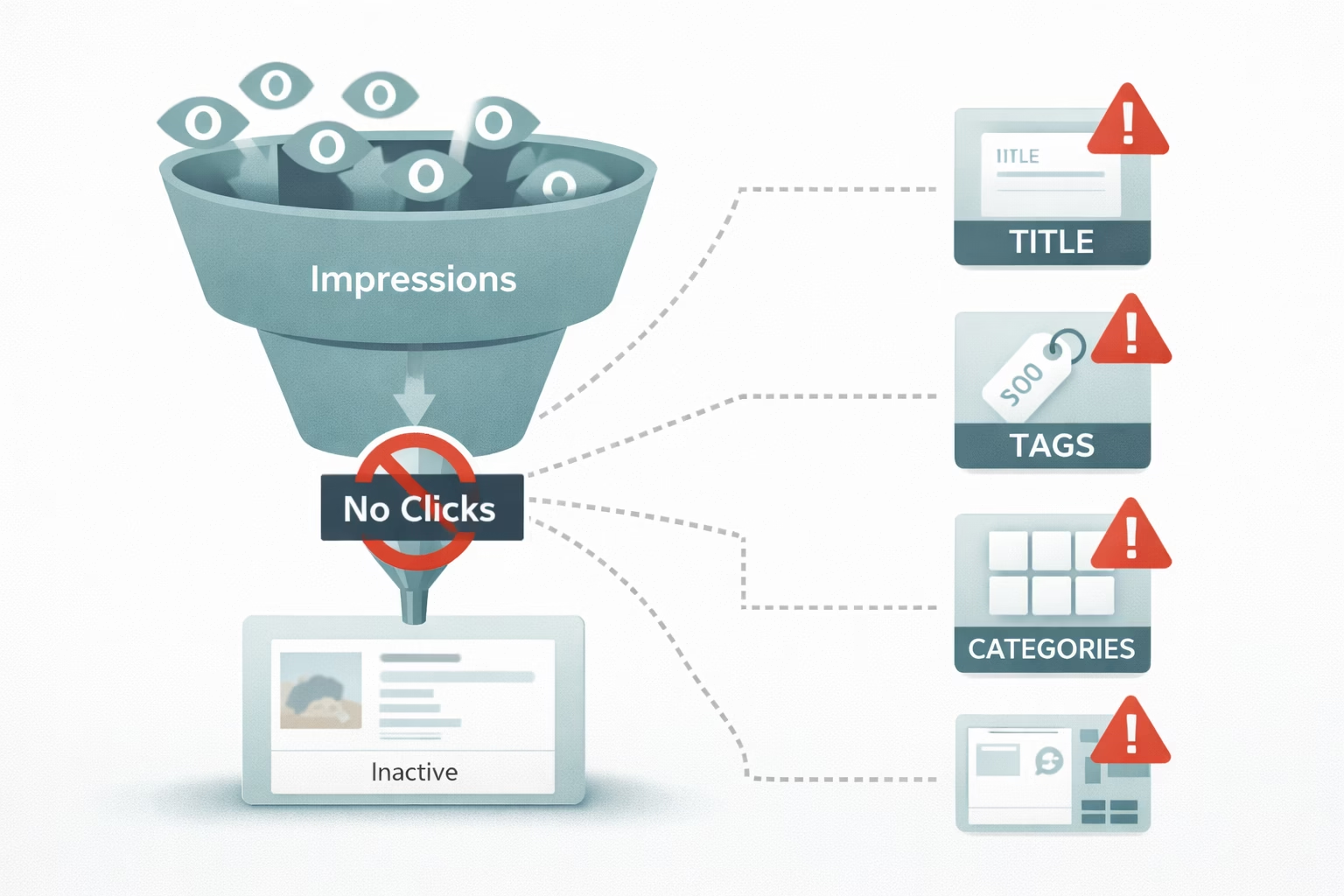
Once your brand story is consistent, your next lever is evidence: Etsy’s analytics will tell you exactly why your Etsy listings aren’t getting traffic, why your Etsy shop has no traffic, or why Etsy SEO isn’t working the way you expect. Start by separating what’s a visibility problem versus a conversion problem. If impressions are low, you have Etsy search visibility issues (your listings aren’t being shown). If impressions are healthy but visits and orders are low, your listing is being found but not chosen.
In Etsy’s Stats, watch these metrics like diagnostics, not vanity numbers:
- Impressions (Etsy search): how often you appear for a query. Low impressions often point to weak relevance (keywords/tags/categories) or overly competitive terms.
- Click-through rate (CTR) = visits/impressions: tells you if your thumbnail, title snippet, price, and badges are compelling. Low CTR is a “not getting views” symptom even when you’re technically visible.
- Conversion rate: signals mismatch between search intent and what your listing delivers (photos, description clarity, shipping cost, processing time, variations).
- Traffic sources: confirm whether “Etsy search” is underperforming versus direct/social, which can mask SEO issues.
Use Search Analytics (when available) to audit query-to-listing fit. Look for queries where you have impressions but almost no clicks; those terms are either misleading (wrong audience) or your snippet doesn’t match the query’s promise. Conversely, if a query converts well, expand around it with closely related long-tail phrases.
Common Etsy keyword mistakes show up clearly in data:
- Overstuffed, repetitive tags that don’t widen reach; impressions stay flat.
- Too-broad keywords (e.g., “gift,” “art”) that generate impressions but tank CTR and conversion.
- Wrong category/attributes, which reduces eligibility for filtered searches.
- Chasing trends that bring unqualified traffic; visits rise, orders don’t.
Make changes in controlled tests: adjust one variable (primary photo, first 40 characters of title, top tags, category/attributes), then compare a 7–14 day window. Track whether the bottleneck moved (impressions → CTR → conversion). This discipline prevents random edits that reset learning and makes your next community and review-building efforts amplify listings that are already discoverable.
Community Engagement and Social Proof
If your Etsy listings aren’t getting traffic even after you’ve corrected keyword mistakes and your Etsy SEO still feels like it’s not working, the missing piece is often trust. Etsy’s search is designed to surface listings that are likely to convert, and conversion is heavily influenced by social proof and seller presence. When shoppers can’t quickly confirm that you’re active, responsive, and consistently delivering what you promise, you can end up with Etsy search visibility issues that look like “my Etsy shop has no traffic,” when it’s really “my shop isn’t earning clicks.”
Start by showing signs of life beyond your own listings. Consistent community engagement helps you get discovered by people who aren’t searching yet, but will later. Participate weekly in seller spaces where your ideal buyer hangs out: Etsy Teams, niche Facebook groups, Reddit communities, and Instagram/TikTok comment threads. Don’t spam products. Instead, contribute expertise and become recognizable. This kind of visibility can create branded searches (people typing your shop name), direct visits, and saves/favorites that signal buyer interest.
Use social platforms strategically to support Etsy rather than replace it:
- Show proof: packing orders, quality checks, materials, behind-the-scenes.
- Answer buyer questions publicly: sizing, customization, care instructions.
- Share customer photos (with permission) to reduce hesitation.
- Drive “warm” traffic to a specific listing that matches the post’s promise.
Positive reviews are the fastest trust shortcut. If your Etsy listings aren’t getting views, it’s often because shoppers click competitors with more recent, detailed feedback. Build a review system that feels natural and compliant:
- Include a thank-you insert that asks for an honest review and tells them exactly what helps (“mention fit, color, shipping speed”).
- Send a post-delivery message only after you’re confident it arrived, focused on support first (“If anything’s off, message me so I can fix it”).
- Create a shareable moment: gift-ready packaging, a care card, or a small bonus that prompts “I should post this.”
Then amplify social proof. Feature review quotes in listing photos, reuse UGC in social posts, and respond to reviews (especially detailed ones) to show attentiveness. When Etsy sees stronger buyer confidence, your click-through and conversion can improve—often solving “Etsy SEO not working” symptoms without touching a single tag.
Conclusions
Optimizing your Etsy shop to get more traffic involves understanding Etsy’s algorithm, refining your SEO strategies, and actively engaging with the Etsy community. By improving your listing titles, descriptions, images, and leveraging promotions, you can increase visibility and sales. Stay informed with Etsy’s analytics and adjust as needed for sustained success.